EN
EN

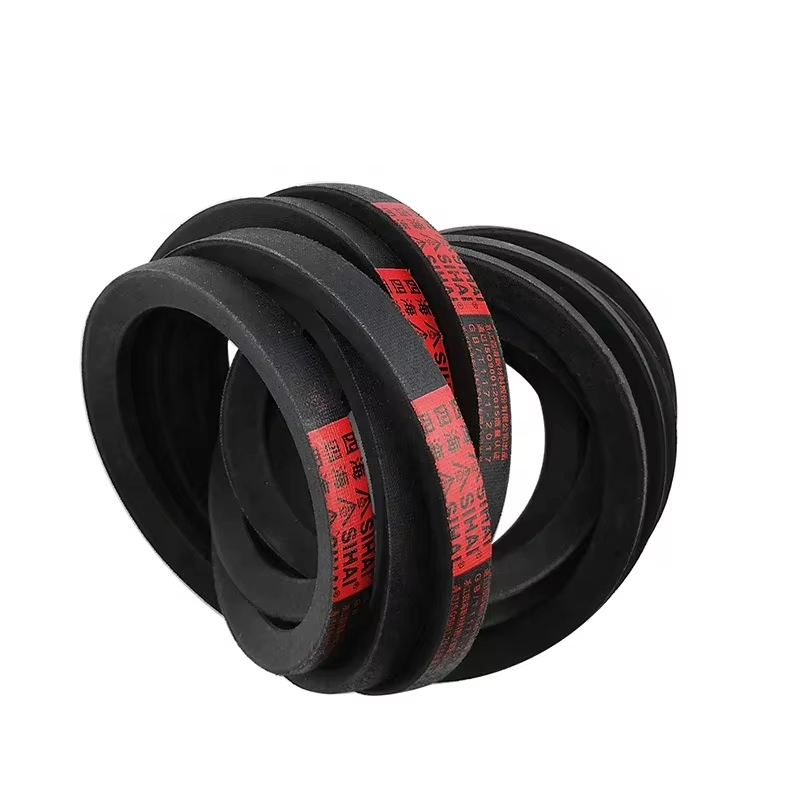
Timing Belt Scalability: Meeting High-Volume Industrial Demand
Production Capacity and ISO 9001-Certified Batch Consistency for Bulk Timing Belt Orders
Scalable timing belt manufacturing demands robust systems to maintain precision across thousands of units. ISO 9001–certified facilities use statistical process control (SPC) to hold dimensional tolerances within ±0.03mm per batch—ensuring full interchangeability in automated assembly lines. This consistency is essential for automotive and packaging operations running 24/7, where even minor deviations can trigger costly downtime. For example, HTD profile deviations exceeding 0.1mm significantly increase the risk of tooth shear, raising failure rates by up to 40% in high-torque applications.
Material and Profile Uniformity: Ensuring HTD and Polyurethane Timing Belt Reliability Across Batches
Material homogeneity is foundational to long-term reliability in bulk orders. Advanced polyurethane compounding eliminates inconsistent curing—a key weakness of rubber alternatives—while sustaining tensile strength above 15 MPa across all production runs. Laser-guided extrusion ensures precise HTD tooth geometry, cutting synchronization errors by 90% compared to non-standardized belts. Validation comes from ISO 1813–certified load cycling tests: top-tier polyurethane timing belts withstand over 2 million cycles at 30N/mm with less than 0.5% elongation.
Timing Belt Procurement Strategy for Large-Scale Operations
Balancing Lead Time Compression with Quality Assurance in Global Timing Belt Supply Chains
Securing bulk timing belt orders requires aligning accelerated delivery timelines with uncompromised quality control. Tiered supplier vetting—prioritizing ISO 9001–certified partners—is critical, as only 37% of manufacturers maintain consistent material properties across batches exceeding 10,000 units (2023 elastomer study). Hybrid inventory models deliver optimal balance: holding 60-day safety stock for high-demand HTD profiles while applying just-in-time principles to specialty polyurethane belts reduces warehousing costs by 19% without compromising availability. Real-time production tracking, paired with contingency protocols for raw material shortages, mitigates disruption risks—especially important given that global shipping delays extended average lead times by 30% in 2024.
UK and EU Market Readiness: Availability, Logistics Resilience, and Just-in-Time Timing Belt Delivery
Regional procurement success depends on localized logistics networks and accurate demand forecasting. Nearshoring 70% of production to EU-based facilities cuts delivery windows to under 72 hours and avoids import tariffs—vital when 58% of automotive plants rely on JIT replenishment. Strategic partnerships with bonded warehouses in Rotterdam and Felixstowe bypass customs bottlenecks, enabling 99% on-time fulfillment even during peak demand. Digital twin simulations of transport routes further refine inventory placement, lowering last-mile costs by 22% versus traditional bulk shipping.
Timing Belt Durability and Performance Validation at Scale
Load Cycling and Tension Endurance: Real-World Data for 5M HTD Polyurethane Timing Belts
In high-volume industrial applications, proven endurance under real-world stress is non-negotiable. The 5M HTD polyurethane profile delivers exceptional resilience, validated through accelerated testing showing stable performance after 1.2 million load cycles—equivalent to more than five years of continuous operation. Key metrics include:
- Tension retention: Holds 98% of initial tension at 70N/mm after 500,000 cycles
- Elongation resistance: Less than 0.3% dimensional change under 150kgf loads
- Surface integrity: No tooth shear or cracking observed across thermal cycling from –30°C to 120°C
These results were generated using ISO 1813–certified test rigs replicating conditions in packaging lines and CNC machinery. In continuous high-torque transmission, this polyurethane compound extends service life by 40% versus rubber alternatives—directly reducing unplanned downtime in large-scale operations.
Regulated-Sector Applications: FDA-Compliant and High-Integrity Timing Belt Solutions
In pharmaceuticals, food processing, and medical device manufacturing, timing belts must meet stringent FDA compliance standards to eliminate contamination risks. These high-integrity solutions use non-toxic, closed-cell polyurethane compounds engineered to resist microbial growth and endure aggressive sterilization methods—including CIP (Clean-in-Place) systems. Stainless steel tension members provide corrosion resistance during high-temperature washdowns while preserving dimensional stability across production batches. In aseptic filling lines, material uniformity prevents particulate shedding that could compromise product safety. Facilities prioritizing FDA-compliant timing belts report fewer contamination incidents and reduced regulatory audit findings—supporting operational continuity in validation-driven environments.
Frequently Asked Questions (FAQ)
What are the benefits of ISO 9001 certification in timing belt manufacturing?
ISO 9001 certification ensures that facilities maintain high-quality standards throughout production processes, leading to consistent batch performance and reduced failure rates.
How does polyurethane compare to rubber in timing belt applications?
Polyurethane provides superior tension retention, elongation resistance, and surface integrity compared to rubber, resulting in longer service life, particularly in high-torque transmission scenarios.
Why is FDA compliance important for timing belts in regulated sectors?
FDA compliance ensures that timing belts meet safety standards and resist contamination, crucial for pharmaceuticals, food processing, and medical device manufacturing environments.
Table of Contents
- Timing Belt Scalability: Meeting High-Volume Industrial Demand
- Timing Belt Procurement Strategy for Large-Scale Operations
- Timing Belt Durability and Performance Validation at Scale
- Regulated-Sector Applications: FDA-Compliant and High-Integrity Timing Belt Solutions
- Frequently Asked Questions (FAQ)