EN
EN

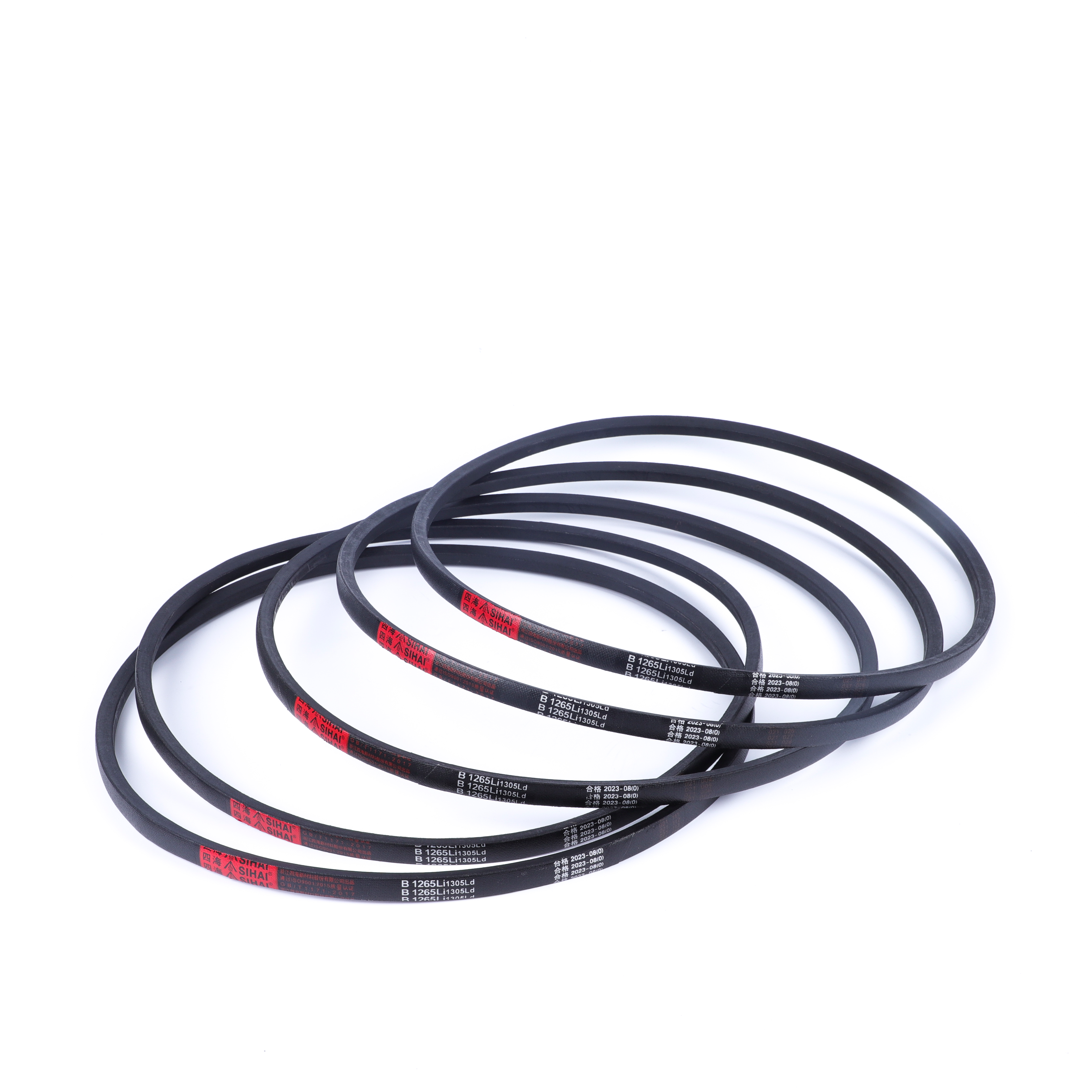
Core Selection Criteria for Washing Machine Belts
Load, Speed, and Width Requirements Specific to Batch-Style Washing Machines
Washing machines that work in batches place special requirements on their components. The belts need to take on those occasional heavy loads when the machine goes through its quick fill and drain phases. Most industrial versions can manage anywhere from 50 to 200 kilograms each cycle, so they really need belts with at least 800 Newtons per square millimeter strength just to prevent stretching when things get tough. There's also a connection between how wide the belt is and what size drum it supports. Narrower belts around 20 to 30 mm are fine for smaller machines below 75 liters capacity, but bigger operations require wider belts measuring 40 to 50 mm across. When the machine starts agitating clothes, it moves at speeds between 20 and 60 meters per minute. Getting the right amount of friction here matters a lot because if there isn't enough grip, stuff slips around inside, which actually cuts down on how clean everything gets by roughly 30 percent. Finding the right belt means looking at all these factors together. A good choice might be something rated for handling 100 kg loads moving at 50 meters per minute even when water temperatures reach 80 degrees Celsius. This kind of belt keeps things running smoothly without losing parts during those intense spinning cycles that generate high G-forces.
Drive Compatibility and Belt Path Geometry for Stable Wash Cycle Operation
Getting drive systems properly synchronized helps stop belts from walking off track and causing vibrations when directions change. Motor pulley to drum ratios usually fall between 1:3 and 1:5, but these need to match up with how elastic the belt material actually is so tension stays consistent through all those thousands of cycles we talk about. When dealing with complicated path configurations, especially ones that include extra idler pulleys or sharp 90 degree bends, the belt needs stronger longitudinal support to keep from drifting sideways. Take serpentine routes for example they typically require around 15 to maybe even 20 percent more reinforcement along the edges compared to straightforward layouts just to stay on track at high speeds like 800 RPM. Good geometry alignment cuts down on those annoying harmonic vibrations by about 40% compared to setups that are out of whack, which means bearings last much longer in practice. Self tracking designs with things like crowned pulleys or V guides really help stabilize everything, especially important in machinery running variable speed inverters where acceleration can hit well over 2.5G forces.
Washing Machine Belt Material Performance Under Sanitary Conditions
Polyurethane vs. Thermoplastic Elastomer vs. Modular Plastic: Chemical Resistance in Detergent and Chlorine Washdowns
Belts used in washing machines within batch processing settings need to stand up against harsh detergents and chlorine-based sanitizers without breaking down. Polyurethane or PU belts work well here since they can handle a wide range of pH levels from around 2 to 12 and resist damage during steam cleaning operations. Thermoplastic elastomers (TPE) fall somewhere in between in terms of performance, though these materials tend to break down faster when coming into contact with strong oxidizing agents such as sodium hypochlorite. For facilities dealing with particularly aggressive cleaning routines, modular plastic belts made from ultra high molecular weight polyethylene (UHMW-PE) are often the best choice. These belts maintain their integrity much longer because of their dense molecular structure which helps prevent those tiny cracks that develop after thousands upon thousands of wash cycles typically seen in industrial laundry applications.
| Material Type | Chlorine Resistance (500ppm) | Alkaline Detergent Rating | Crack Propagation Risk |
|---|---|---|---|
| Polyurethane | High (Class 5) | Excellent | Low |
| Thermoplastic Elastomer | Moderate (Class 3) | Good | High at >60°C |
| Modular Plastic | Extreme (Class 5+) | Superior | Negligible |
Critical considerations include eliminating water-absorbing materials like nylon—which can harbor pathogens despite surface sanitation—and avoiding standard rubber compounds in facilities handling reactive chemicals due to accelerated hydrolytic degradation.
FDA, USDA, and ISO 14159 Compliance: Why It Matters for Washing Machine Belt Certification
Meeting regulatory requirements isn't optional when it comes to food processing and pharmaceutical production lines. The FDA's CFR 21 regulations along with USDA FSIS guidelines require belt materials that won't release harmful substances and won't soak up contaminants during cleaning procedures. Then there's ISO 14159 certification which looks at how easily surfaces can be cleaned down to those microscopic measurements (around 0.8 micrometers Ra roughness) and checks if designs actually stop bacteria from hiding in crevices. Facilities that didn't follow these rules saw almost half more product recalls related to contamination problems last year according to recent facility audits, causing major headaches during inspections. Plants that invest in belt systems certified against all three standards at once have been shown to cut down on cross contamination risks by nearly 90%, making a big difference in both safety and operational efficiency.
Optimizing Throughput and Reliability with Washing Machine Belts
Dynamic Load Stress During Acceleration/Deceleration in Batch Cycles
Industrial washing machines go through serious stress when they start and stop suddenly. The forces involved can spike to around three times what they normally handle during these quick transitions between cycles. These sudden impacts put pressure on the points where different materials connect, which speeds up wear and tear problems. To combat this issue, manufacturers use special rubber-like materials designed specifically to absorb shock without bouncing back. Keeping everything tight within about 2% variation helps stop those annoying vibrations that actually make things worse by increasing stress levels by roughly 40%. We've seen this in our own plant tests too. Heat management matters just as much though. When these machines run at high temperatures around 85 degrees Celsius for their wash cycles, regular plastics break down much quicker than expected after repeated heating cycles.
Speed-Throughput Tradeoffs: Matching Belt Speed (20–60 m/min) to Part Retention and Cycle Time
| Speed Range | Throughput Rate | Retention Risk | Recommended Use Case |
|---|---|---|---|
| 20–35 m/min | Moderate | Minimal | Delicate items |
| 36–50 m/min | High | Controlled | Standard batches |
| 51–60 m/min | Maximum | High | Robust components |
Higher belt velocity improves throughput but reduces water-contact time by 12% per 10 m/min increase. Above 45 m/min, centrifugal forces overcome drain-guard retention—especially on hydrophobic surfaces. Balance is achieved through:
- Variable-frequency drives enabling speed adjustments between pre-wash and rinse cycles
- Chevron-pattern belts increasing fluid adhesion by 17% at elevated speeds
- Strategic flight heights maintaining optimal detergent residence time
Thermally stable coatings prevent polymer softening at peak speeds, preserving dimensional integrity through 20,000+ cycles.
Long-Term Durability and Total Cost of Ownership for Washing Machine Belts
Heat, Oil, and Mechanical Wear Resistance at 70–95°C Wash Zones
Belts on washing machines have it pretty rough really. They deal with constant heat running somewhere between 70 to maybe 95 degrees Celsius, get hit with strong cleaning agents like bleach and those harsh alkaline detergents, plus all the strain from heavy laundry loads day after day. According to various industry reports, belts made from reinforced polyurethane or special thermoplastic elastomers last about three times longer than regular rubber ones when put through this kind of abuse. Facilities that handle large volumes of laundry see their replacement needs drop around 60% when switching to these heat resistant materials. That means big savings over time since they don't have to replace belts so often, which cuts down on maintenance costs and downtime for repairs.
MTBF, Tool-Free Installation, and Maintenance Efficiency: Reducing Downtime in High-Volume Lines
Getting the most out of equipment over its lifetime really comes down to two things: making sure components last longer between failures and cutting down on the time spent fixing them. Systems that let workers install belts without tools can save around three quarters of the time needed compared to traditional bolted setups. This matters a lot because when production lines stop running, companies are losing money fast. One study put the cost at roughly $740k every single hour the line is down. When manufacturers standardize their parts specs and provide clear visual guides for installation, mistakes drop off dramatically. These simple changes have been shown to bring maintenance expenses down nearly half each year, all while keeping machines running reliably about 98% of the time.
FAQ
What are the key factors to consider when selecting washing machine belts for industrial use?
Key factors to consider include load capacity, speed requirements, belt width, drive compatibility, and material performance under sanitary conditions.
Why is compliance with FDA, USDA, and ISO important for washing machine belts?
Compliance ensures that belt materials don't release harmful substances or absorb contaminants, which is crucial in food processing and pharmaceutical production lines.
How do drive systems impact belt performance in washing machines?
Proper synchronization of drive systems prevents belt misalignment and related vibrations, ensuring stable operation during wash cycles.
What materials are recommended for belts used in harsh cleaning environments?
Polyurethane and modular plastic belts are recommended for their resistance to harsh detergents and chlorine-based sanitizers.
Table of Contents
- Core Selection Criteria for Washing Machine Belts
- Washing Machine Belt Material Performance Under Sanitary Conditions
- Optimizing Throughput and Reliability with Washing Machine Belts
- Long-Term Durability and Total Cost of Ownership for Washing Machine Belts
-
FAQ
- What are the key factors to consider when selecting washing machine belts for industrial use?
- Why is compliance with FDA, USDA, and ISO important for washing machine belts?
- How do drive systems impact belt performance in washing machines?
- What materials are recommended for belts used in harsh cleaning environments?