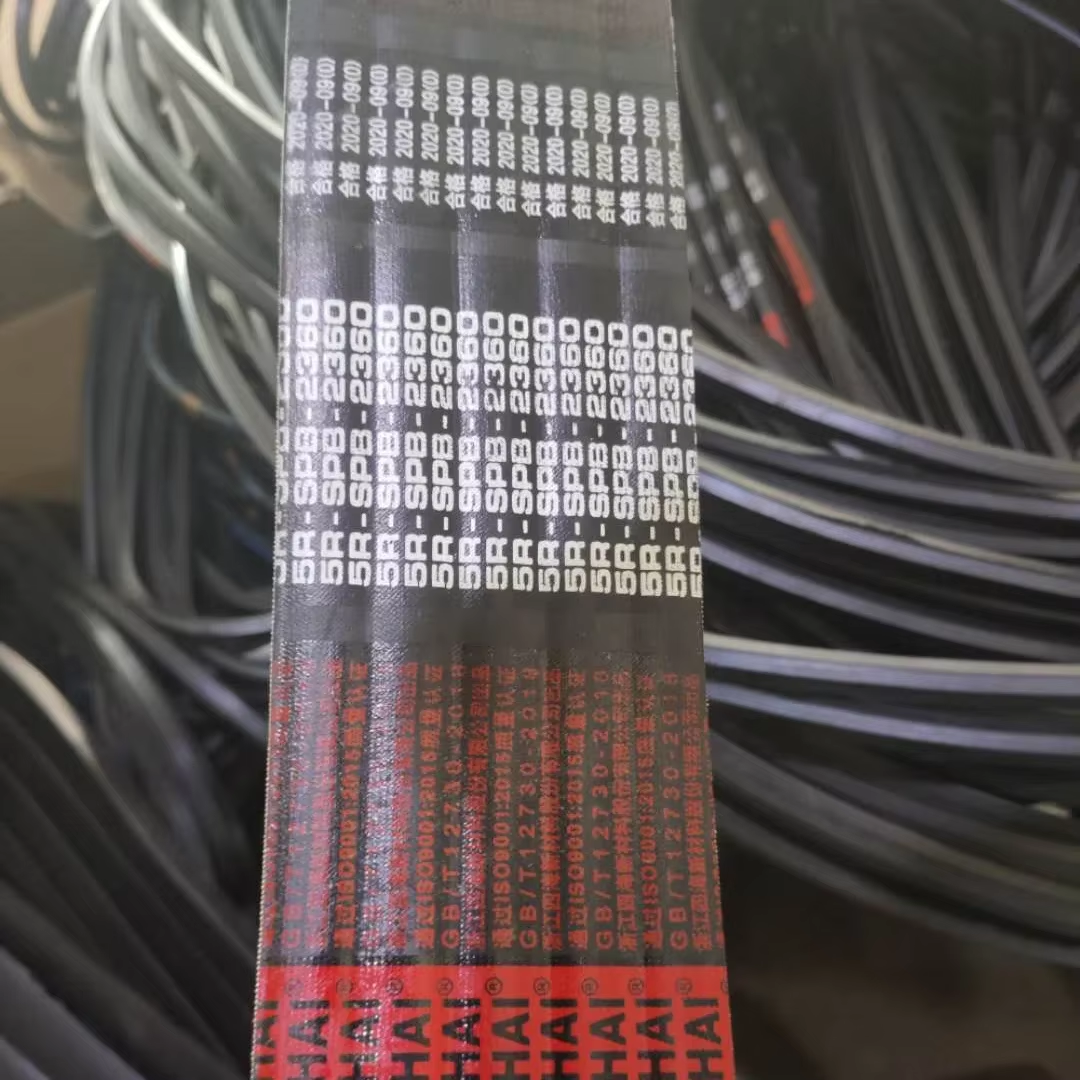
Washing machine belts endure thermal stress from motors reaching 185°F, chemical exposure to alkaline detergents, and mechanical abrasion during spin cycles. EPDM (ethylene propylene diene monomer) excels in heat resistance—maintaining flexibility at sustained 250°F—and resists ozone degradation and bleach-based cleaners three times more effectively than neoprene due to its saturated polymer backbone. Neoprene, by contrast, offers superior oil resistance—critical near motor bearings—and better handles sudden load shifts during unbalanced spins. While EPDM retains 90% tensile strength after 5,000 wash cycles versus neoprene’s 75%, neoprene’s lower cold-weather brittleness (down to –40°F) makes it preferable in colder climates. For most households, EPDM delivers longer service life under typical high-temperature conditions; neoprene remains the pragmatic choice where oil contamination is likely.
Embedded reinforcement fibers are essential for resisting stretch, maintaining dimensional stability, and preventing failure under dynamic loads. Fiberglass provides economical tensile support (150 kN/m²) but limited flexibility. Polyester cords strike an optimal balance—limiting elongation to under 2% under load—ensuring precise drum synchronization without excessive rigidity. Aramid fibers (e.g., Kevlar®) deliver exceptional strength-to-weight ratios (500 kN/m²) and withstand temperatures up to 400°F, significantly reducing snap risk during high-speed spins. Field data shows aramid-reinforced belts last 40% longer than fiberglass equivalents in heavy-use applications. All three fiber types help suppress “necking”—width reduction under tension—that accelerates pulley wear. In multi-rib belts, aligning fiber orientation below 20° optimizes load distribution and prevents localized stress fractures.
Belt geometry fundamentally shapes how forces transmit during aggressive spin cycles. V-belts rely on wedge friction within pulley grooves—offering strong grip for moderate imbalance but concentrating stress on narrow contact zones, increasing groove wear over time. Multi-rib (Poly-V) belts distribute torque across multiple longitudinal ribs, reducing localized wear by 40% under high-torque loads and improving tolerance for unbalanced loads common in household machines. Flat belts eliminate groove abrasion entirely but demand precise pulley alignment and consistent tension to avoid slippage. For modern washing machines prioritizing reliability and efficiency, Poly-V designs represent the best compromise of tensile integrity, surface durability, and real-world imbalance resilience.
Mismatched belt-pulley geometry is a leading cause of premature failure—not due to material weakness, but inefficient force transmission. Critical compatibility requirements include:
When matched correctly, these parameters ensure uniform force distribution across the belt’s structure—preserving tensile integrity, minimizing heat buildup, and extending service life.
Operational conditions directly govern belt fatigue life. At 1,200 RPM, centrifugal forces increase belt tension by up to 40% compared to 800 RPM—raising failure probability by 15% in accelerated wear testing. Vibration harmonics—especially during unbalanced spin cycles—induce micro-cracks through cyclic stress; studies show severe vibration exposure reduces tensile strength by 30% over just 500 cycles. Humidity compounds damage: moisture absorption weakens polymer bonds in both EPDM and neoprene, accelerating hydrolysis and reducing fatigue life by 50% in high-humidity environments versus climate-controlled conditions. Together, these stressors interact synergistically—making environmental and usage context as critical to longevity as material selection.
Proactive, evidence-based maintenance significantly extends belt service life and prevents unexpected failures. Inspect belts every 1–2 years for these OEM-validated indicators:
Replace belts preventively every 3–5 years; reduce this interval to 2–3 years in high-humidity regions or homes with frequent heavy-load cycles. Always verify pulley alignment within 1/16 inch using a precision straight edge—misalignment increases wear by up to 40% and risks bearing overload. Maintain tension per OEM specifications: too loose causes slippage and overheating; too tight strains bearings and accelerates cord fatigue. Adherence to this protocol reduces unplanned breakdowns by 62%, according to appliance reliability field studies conducted by the Association of Home Appliance Manufacturers (AHAM).
EPDM and neoprene are common materials used for washing machine belts. EPDM offers superior heat resistance and chemical endurance, while neoprene is better for oil resistance and colder climates.
Washing machine belts should be replaced every 3-5 years or every 2-3 years in high-humidity areas or with heavy usage.
Higher spin speeds, such as 1,200 RPM, increase belt tension and can lead to a higher probability of failure. It increases the centrifugal forces, which stresses the belt.
Reinforced fibers like fiberglass, polyester, and aramid help resist stretch and maintain tensile strength, critical for durability under dynamic loads.
Key signs include cracks, splits, frayed edges, and glazing on the belt surface. Regular inspection is advised to maintain optimal performance.

Zhejiang Sihai New Material Co., LTD provides high-quality rubber conveyor belts, transmission belts, and industrial hoses. Our durable, heat-resistant belts are ISO 9001 certified and exported to 30+ countries. Trusted by global industries for reliability and innovation. Request a quote today.
No. 21, Dong'an Road, Hongchou Town, Taizhou, Zhejiang, China
Copyright © 2025 by Zhejiang Sihai New Materials Co., Ltd. Privacy Policy
 EN
EN
