EN
EN

How Flat Belt Drives Work and Their Core Operational Advantages
What Are Flat Belts and What Are They Used For?
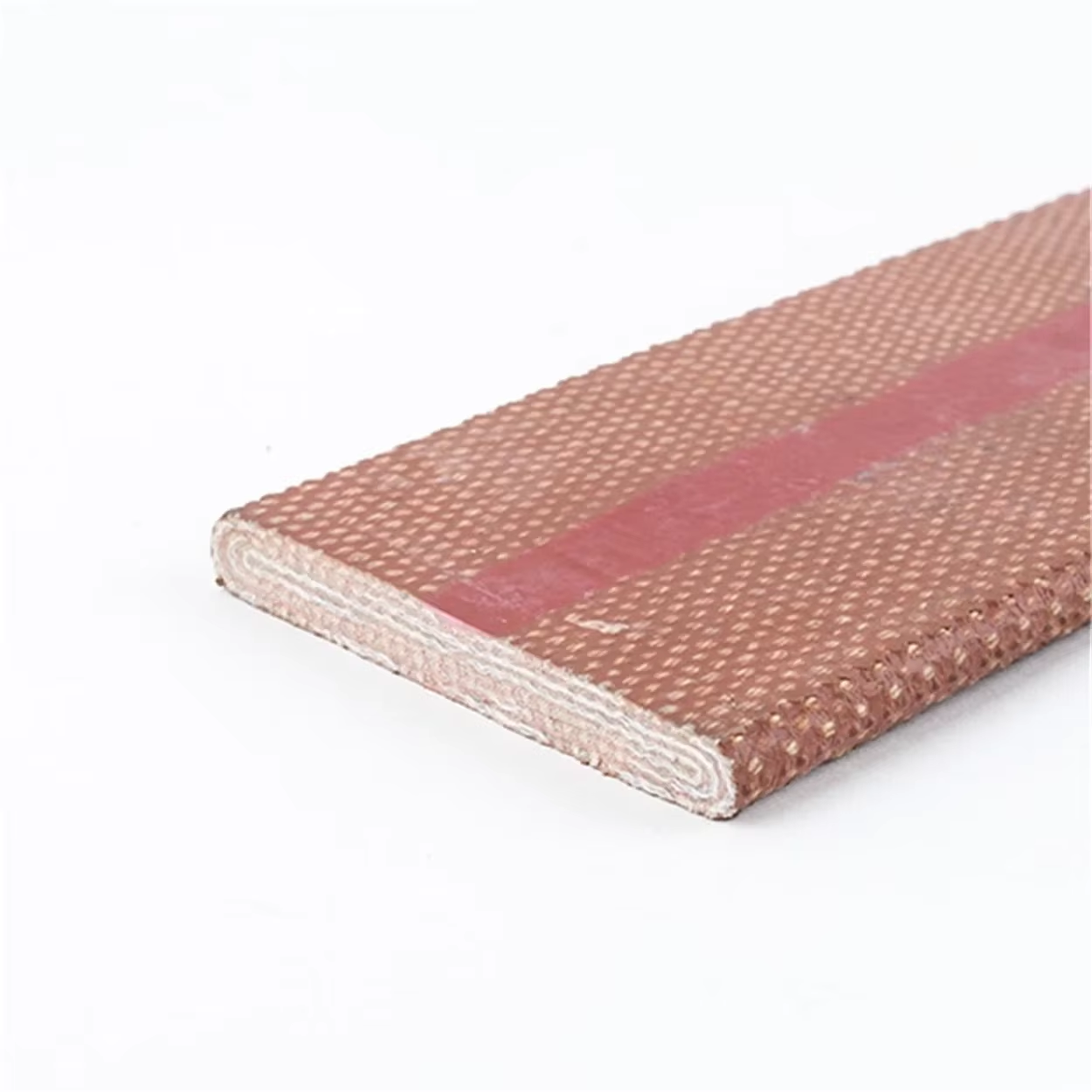
Flat belts serve as components for transferring power, featuring rectangular cross sections that connect rotating shafts together. These differ from V-belts and chains because they work by contacting surfaces on pulleys directly. For this reason, flat belts excel at transmitting power smoothly over longer distances without much loss. Many different industries rely on these belts including textiles, wood working shops, and farms processing crops. We find them running conveyer systems, turning flour mill rollers, even powering big industrial fans across factory floors. Today's flat belts come mostly from synthetic materials or special rubber mixtures rather than old fashioned leather. This change helps them last longer when exposed to dust buildup or extreme heat conditions common in many workshops and production facilities.
Basic Mechanics of Flat Belt Drives in Power Transmission Applications
Flat belt systems transmit power via friction between the belt and pulley surfaces. As the drive pulley rotates, it creates tension that moves the belt and turns the driven pulley. Crowned or tapered pulleys help maintain alignment and prevent slippage. Key design considerations include:
- Pulley diameter ratios for speed control
- Coefficient of friction between belt and pulley materials
- Proper belt tension to optimize power transfer while minimizing wear
Efficiency, Noise Reduction, and Vibration Damping Characteristics
Flat belt drives can reach around 98% efficiency when everything works just right, which beats most chain and gear systems hands down. The smooth surface contact means these belts don't pass on as much vibration, so they work great in machines where precision matters a lot, such as those big paper processing units found in printing plants. Another plus point is the noise factor. These flat belts tend to be significantly quieter than regular V-belts too, cutting down sound levels by about 10 to 15 decibels since there are no teeth or grooves creating all that extra racket during operation.
| Characteristic | Flat Belts | V-Belts | Chain Drives |
|---|---|---|---|
| Efficiency | 95–98% | 85–92% | 92–96% |
| Noise Generation | Low | Medium | High |
| Vibration Damping | High | Moderate | Low |
| Maintenance Frequency | 200–400 hrs | 100–200 hrs | 50–100 hrs |
Ideal Use Cases for Flat Belts in Long-Distance and Industrial Power Transmission
Long-Span Power Transmission in Industrial Settings
Flat belts work really well when we need to transfer power across long horizontal distances, say anything over 15 meters or so. That's why they're commonly seen in places like flour mills, sawmills, and various mining operations around the world. What sets these belts apart is their ability to bend easily without much resistance plus they can handle pretty fast speeds, maybe around 40-45 meters per second give or take. Because of this, there's less energy wasted compared to other systems like chains or gears. For big manufacturing facilities where equipment is spread out across wide spaces, flat belts make sense because one central motor can actually drive several different machines throughout the factory floor at once.
Case Study: Flour Mills Using Flat Belt Drives for Distributed Machinery
A small flour mill located near Bangkok recently swapped out their old chain drive system for flat belts to link together 12 different processing machines spread across nearly 180 meters of factory space. Maintenance expenses dropped significantly after this change, somewhere around 40% within just two years according to their records, plus they no longer had to deal with all those messy oil changes. The workers who run the equipment day in and day out mentioned something interesting too - when there were sudden changes in workload, the new setup handled the torque much better than before. This makes a big difference actually because keeping the grain moving at steady speed throughout the entire milling process is absolutely essential for quality control.
Performance vs. Chain and V-Belts in Extended Layouts
V belts work well for handling higher torque in tight spaces, but flat belts tend to do better across longer distances since they slip less, around 2% or so when loaded at about 70%. When looking at noise levels compared to chain drives, flat belts run roughly 15 to 20 decibels quieter and don't need regular greasing, which makes them great for food processing areas where getting oil everywhere is a big no no. Just keep in mind that if precise speed matching is critical, synchronous belts still beat flat belts hands down for maintaining those exact ratios needed in certain machinery applications.
Design Considerations: Managing Sag and Tension in Long Installations
Effective sag management (typically 1–2% of span length) is essential to prevent premature wear. Engineers use crowned pulleys and automated tensioners to compensate for thermal expansion in rubber-reinforced belts. For spans over 50 meters, modular steel-reinforced polyurethane belts maintain ±0.5% tension consistency even under temperature swings of ±30°C.
Key Applications Across Industries: Textile, Agricultural, and Woodworking Machinery
Precision and Speed Requirements in Textile Machinery
In textile machinery operating above 5,000 RPM, flat belts provide submillimeter precision critical for high-speed looms producing up to 120 meters of fabric per hour. Their uniform contact eliminates harmonic vibrations common with chain drives. A 2024 study found flat belts reduced thread breakage by 18% compared to V-belts in high-speed knitting applications.
Flat Belts in Agricultural Equipment Under Variable Load Conditions
Harvesters and grain augers face load variations up to 300%. Flat belts absorb shock loads 40% more effectively than synchronous belts and resist debris ingress. Field tests show reinforced flat belts maintain 94% torque consistency in combines operating on slopes up to 25°, outperforming chain drives in muddy conditions.
Smooth Torque Delivery in Woodworking and Processing Machines
Table saws and planers require torque variation below 2% to avoid workpiece defects. Flat belts achieve this at speeds up to 3,450 RPM thanks to full-width pulley contact—making them the preferred choice in 78% of industrial jointers according to 2023 woodworking safety guidelines.
Durability in Harsh Environments: Dust, Heat, and Misalignment
High-modulus flat belts with aramid fiber cores function reliably in temperatures above 100°C and tolerate shaft misalignment up to 15°, conditions typical in flour mills. A 2022 durability analysis showed these belts last 2.8 times longer than standard rubber belts in environments with 50 g/m³ airborne particulates.
Comparative Performance Metrics in Harsh Conditions (2024 Data)
| Parameter | Flat Belts | V-Belts | Chain Drives |
|---|---|---|---|
| Heat Resistance (°C) | 120 | 90 | 70 |
| Dust Ingress Failure | 8,200 hrs | 3,500 hrs | 1,900 hrs |
| Misalignment Tolerance | 5°-15° | 2°-5° | <1° |
This data highlights flat belts' superiority in demanding industrial settings requiring resilience and precision.
Types of Flat Belt Drive Configurations and Their Functional Fit
Flat belt drive systems offer distinct configurations tailored to specific operational needs, ensuring adaptability across industrial applications.
Open Belt Configuration for Parallel Shaft Alignment
The open belt setup uses parallel shafts rotating in the same direction, ideal for horizontal machinery like conveyor systems. Its simple design minimizes edge wear and ensures consistent power delivery over long distances.
Crossed Belt Setup for Reverse Rotation Needs
Crossed configurations reverse the driven pulley's rotation by crossing the belt path, useful in packaging equipment requiring bidirectional motion. However, increased internal friction can reduce efficiency at higher speeds.
Quarter-Turn Drives in Compact or Angled Machine Layouts
Quarter-turn designs route belts at 90° angles using guide pulleys, saving space in machinery with perpendicular shafts, such as in woodworking or textile equipment. Accurate alignment is crucial to prevent slippage or edge damage.
Torque Transfer Efficiency Across Flat Belt Drive Types
Open belts deliver 95–98% efficiency under optimal conditions. Crossed belts lose 3–5% efficiency due to angular stress, while quarter-turn setups experience a 2–4% drop from added friction points.
Selecting the Right Flat Belt: Standard vs. High-Performance Options
Choosing between standard and high-performance flat belts depends on operating conditions, load profiles, and maintenance goals. The right selection balances initial cost with long-term reliability in industrial applications.
Material Composition and Construction of Standard Flat Belts
Standard flat belts combine rubber or elastomer layers with fabric reinforcement, offering flexibility for moderate-speed operations. They perform well in low-tension applications like packaging lines or ventilation systems, handling loads up to 25 kW with thicknesses of 2–5 mm. Their smooth surface reduces pulley wear, lowering maintenance in light-duty cycles.
Reinforced Belts for High-Load and Continuous Operation
Reinforced belts incorporate aramid fibers or steel cords within synthetic compounds, achieving tensile strengths over 700 N/mm². This construction resists elongation under loads exceeding 50 kW, making them suitable for mining conveyors and metal processing lines.
| Characteristic | Standard Belts | Reinforced Belts |
|---|---|---|
| Max Operating Temp | 85°C | 150°C |
| Shock Load Tolerance | Moderate | High |
| Replacement Interval | 12-18 months | 24-36 months |
Reinforced belts reduce energy losses by 15–20% in high-torque scenarios compared to standard versions.
Lifecycle Cost Analysis: Balancing Economy and Durability
Although standard belts cost 40–60% less initially, reinforced variants typically offer 30% lower lifetime costs in continuous operations. Facilities with frequent starts/stops or abrasive environments benefit most from reinforced designs, whose abrasion-resistant layers last three times longer. For intermittent-use machinery, standard belts provide reliable performance without unnecessary expense.
FAQ
What are the main advantages of flat belts?
Flat belts provide smooth power transmission, reduce noise, and minimize vibrations compared to chains or V-belts. They are ideal for long-distance operations, achieving high efficiency rates.
Where are flat belts commonly used?
Flat belts are used in various industries including textiles, agriculture, woodworking, and mining, primarily for their ability to handle long-span power transmission and smooth torque delivery.
How do flat belts compare to V-belts and chains in terms of maintenance?
Flat belts generally require less frequent maintenance than V-belts or chains, offering extended operational hours and durability in harsh environments.
Table of Contents
- How Flat Belt Drives Work and Their Core Operational Advantages
- Ideal Use Cases for Flat Belts in Long-Distance and Industrial Power Transmission
- Key Applications Across Industries: Textile, Agricultural, and Woodworking Machinery
- Types of Flat Belt Drive Configurations and Their Functional Fit
- Selecting the Right Flat Belt: Standard vs. High-Performance Options
- FAQ