EN
EN

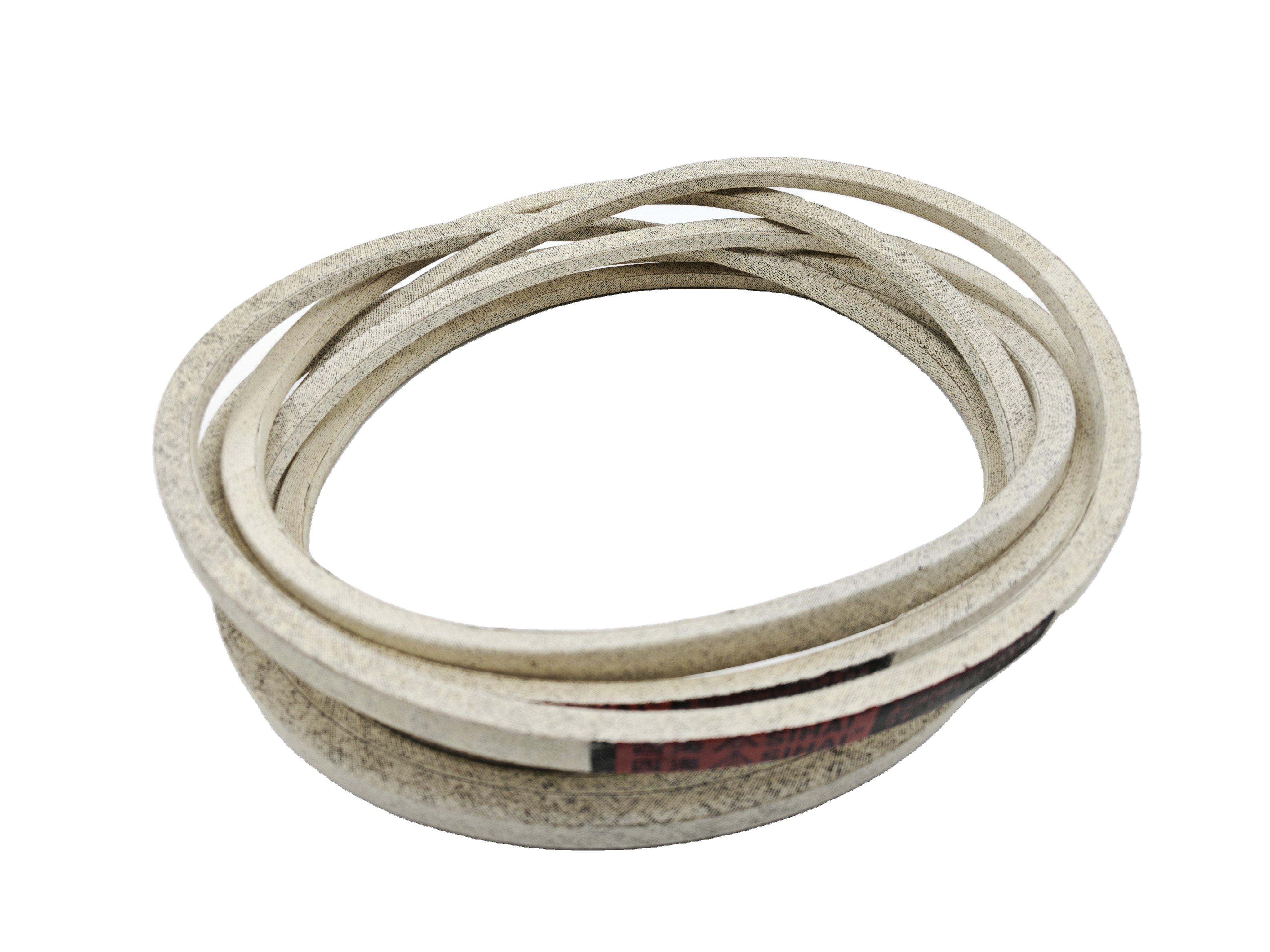
Material Composition: The Core of Car Belt Durability
HNBR Rubber and Its Resistance to Heat and Aging
Car manufacturers have increasingly turned to hydrogenated nitrile butadiene rubber, commonly known as HNBR, when making vehicle belts because it holds up much better against heat and chemicals compared to other materials. These belts stay flexible even when exposed to temperatures reaching around 150 degrees Celsius (about 302 Fahrenheit), something regular belts tend to crack or harden after repeated exposure to engine heat over time. A recent report from the International Rubber Research Board back in 2023 showed some pretty impressive numbers too HNBR belts actually lasted about 40 percent longer than standard nitrile rubber ones when put through those tough high load situations that engines create. What makes this possible? The hydrogenation process basically makes these belts less likely to break down when they come into contact with engine oils or get attacked by ozone in the atmosphere, which is why many auto parts suppliers are now stockpiling HNBR instead of older materials.
Reinforcing Fibers: How Fiberglass, Polyester, and Kevlar Enhance Strength
To withstand mechanical stress, modern car belts incorporate high-strength fibers into their core:
- Fiberglass ensures dimensional stability and precise timing synchronization
- Polyester offers balanced flexibility and cut resistance, enduring up to 600 MPa of tensile stress
- Kevlar-grade aramid fibers absorb shock loads in serpentine belts, reducing stretch by 70% during peak torque events
These materials work together to prevent elongation and failure during rapid acceleration or deceleration, enhancing overall reliability.
Comparing Rubber, Polyurethane, and Silicone in Car Belt Applications
| Material | Temperature Range | Oil Resistance | Fatigue Life* | Common Use Cases |
|---|---|---|---|---|
| HNBR Rubber | -40°C to 150°C | High | 80–100k mi | Timing belts, alternators |
| Thermoplastic Polyurethane (TPU) | -30°C to 120°C | Moderate | 60–80k mi | Accessory drive belts |
| Fluorosilicone | -55°C to 200°C | Low | 50–70k mi | High-temp racing engines |
*Based on SAE J2432 accelerated testing protocols
While polyurethane performs well in damp environments due to hydrolysis resistance, and fluorosilicone excels in extreme heat, HNBR provides the best balance of oil resistance, temperature tolerance, and fatigue life–making it ideal for everyday vehicles.
Structural Design Principles That Maximize Transmission Efficiency and Longevity
Modern car belts use a three-layer architecture engineered for durability and performance:
- Outer cover: Abrasion-resistant rubber protects against road debris
- Tension members: Fiberglass or Kevlar cords maintain structural integrity under load
- Friction surface: Micro-textured polyurethane increases pulley grip by 42%, as verified by Society of Automotive Engineers testing in 2022
The way these belts are built tells us a lot about what they need to do. Serpentine belts have those broad, ribbed designs that handle around 6 to 8 kilonewtons of tension when driving several different components at once. Timing belts take a completely different approach with their precisely molded teeth that keep the camshaft and crankshaft moving together with incredible accuracy, usually within just 0.01 degrees. Looking at how they wear out reveals interesting contrasts too. Most problems with serpentine belts come from the ribs getting sheared off when accessories put too much strain on them. Timing belts tend to break down differently though, mostly because their teeth deform when sudden torque spikes occur during operation.
Tooth geometry plays a critical role in longevity. Parabolic tooth profiles reduce stress concentration by 37% compared to trapezoidal designs, and convex backside surfaces minimize bending strain during pulley engagement. Finite element analysis confirms these features extend service life by 28,000–35,000 cycles in turbocharged applications.
Environmental and Mechanical Stressors Impacting Car Belt Lifespan
Car belts operate in harsh environments where chemical, thermal, and mechanical stresses combine to limit service life. In both conventional and hybrid engines, three key factors dominate wear patterns.
High Temperatures, Oils, and Coolants: Chemical Degradation Risks
When engines run hotter than 200 degrees Fahrenheit, HNBR rubber starts breaking down much faster than it would at normal temperatures. According to research published in last year's Material Stability Study, this heat exposure speeds up oxidation processes by around three times what we see under regular conditions. And then there's the issue with petroleum products. These oils really take a toll on rubber components. A single incident where oil gets onto belts can cut their flexibility down by nearly half because the chemicals start eating away at those long molecular chains inside the material. That's why most top quality manufacturers have started incorporating several protective layers into their designs these days.
| Protection Layer | Function | Performance Impact |
|---|---|---|
| Aramid fiber wrap | Chemical barrier | Reduces fluid absorption by 65% |
| Heat-resistant coating | Thermal insulation | Lowers operating temps by 30°F |
| Micro-porous surface | Coolant repellency | Prevents 90% of chemical adhesion |
These innovations significantly delay chemical aging without compromising flexibility.
Tension, Torque Cycles, and Dynamic Load Challenges in Modern Engines
Turbocharged engines generate 58% more peak torque fluctuation than naturally aspirated ones, subjecting belts to instantaneous load variations between 80–120 N·m. These dynamic forces contribute to gradual tension loss, especially in serpentine belt systems. Industry guidelines recommend replacement every 60,000–100,000 miles or 5–7 years to ensure reliable operation under such conditions.
Microcrack Formation and Material Fatigue Under Continuous Stress
Looking at high resolution images shows us something interesting about belt failures. Around 8 out of 10 times, problems start with tiny cracks smaller than 0.2mm right at the bottom of those belt teeth. What's even more concerning is how these small cracks spread much quicker in cars with start stop systems. Those belts get engaged over 450 times each day, way more than the usual 120 cycles we see in traditional engines. All this repeated stress really wears down the materials faster than expected. The automotive industry needs to rethink their rubber compounds and overall belt designs if they want to keep up with modern vehicle demands without constant repairs.
Innovations in Testing and Predictive Modeling for Belt Durability
Accelerated Aging and Stress Testing for Real-World Performance Simulation
To test how products hold up in actual usage scenarios, manufacturers run 500 hour thermal cycling tests. These tests recreate extreme temperature changes ranging from minus 40 degrees Fahrenheit all the way up to 300 degrees Fahrenheit. They also include varying torque patterns that mirror what happens during city driving with constant stopping and starting. For detecting problems before they become serious issues, polymer analysis comes into play. Tools such as FTIR spectroscopy can spot signs of chemical breakdown about 30 percent earlier than simply looking at something visually. According to findings released in a recent 2024 industry study, belt designs featuring hybrid aramid fiberglass cores ended up developing roughly 12 percent fewer tiny tears when put through simulated 150 thousand mile wear tests compared to traditional polyester reinforced belts. This kind of improvement makes a real difference in product longevity.
Case Study: Analyzing Car Belt Failures in Turbocharged and High-Efficiency Engines
Since around 2020, smaller engines have become all the rage, and this shift has really cranked up the pressure on turbochargers. Belt loads went up somewhere between 18 and 22 percent, which explains why so many serpentine belts are failing these days. Looking at our data from about 1,400 units, we found that rib shearing happens in roughly 7 out of 10 cases when belts give out. The good news is that predictive models are getting better at spotting problems before they happen. These models connect the dots between how rubber gets softer over time and those annoying vibrations coming from the crankshaft. They're actually pretty good at predicting when teeth might separate, hitting about 85% accuracy rate. Smart manufacturers aren't waiting for failures anymore though. Some companies are already putting laser etched wear markers on their belts so mechanics can spot issues early. Others are tweaking tooth angles by anywhere from 5 to 8 degrees to spread out the stress points and make belts last longer under tough conditions.
FAQ Section
What is the main benefit of using HNBR rubber in car belts?
HNBR rubber offers superior resistance to heat and chemicals compared to standard materials, making it more durable and effective in high-stress conditions.
How do reinforcing fibers like Kevlar enhance the strength of car belts?
Reinforcing fibers such as Kevlar absorb shock loads, significantly reducing stretch during peak torque events and enhancing overall reliability.
Why are serpentine belts recommended for replacement every 60,000–100,000 miles?
Serpentine belts are subject to dynamic load variations and gradual tension loss, therefore regular replacement ensures reliable operation.
What are some innovations in testing for car belts?
Innovations include thermal cycling tests and polymer analysis through FTIR spectroscopy, which detect issues early and simulate real-world performance.