EN
EN

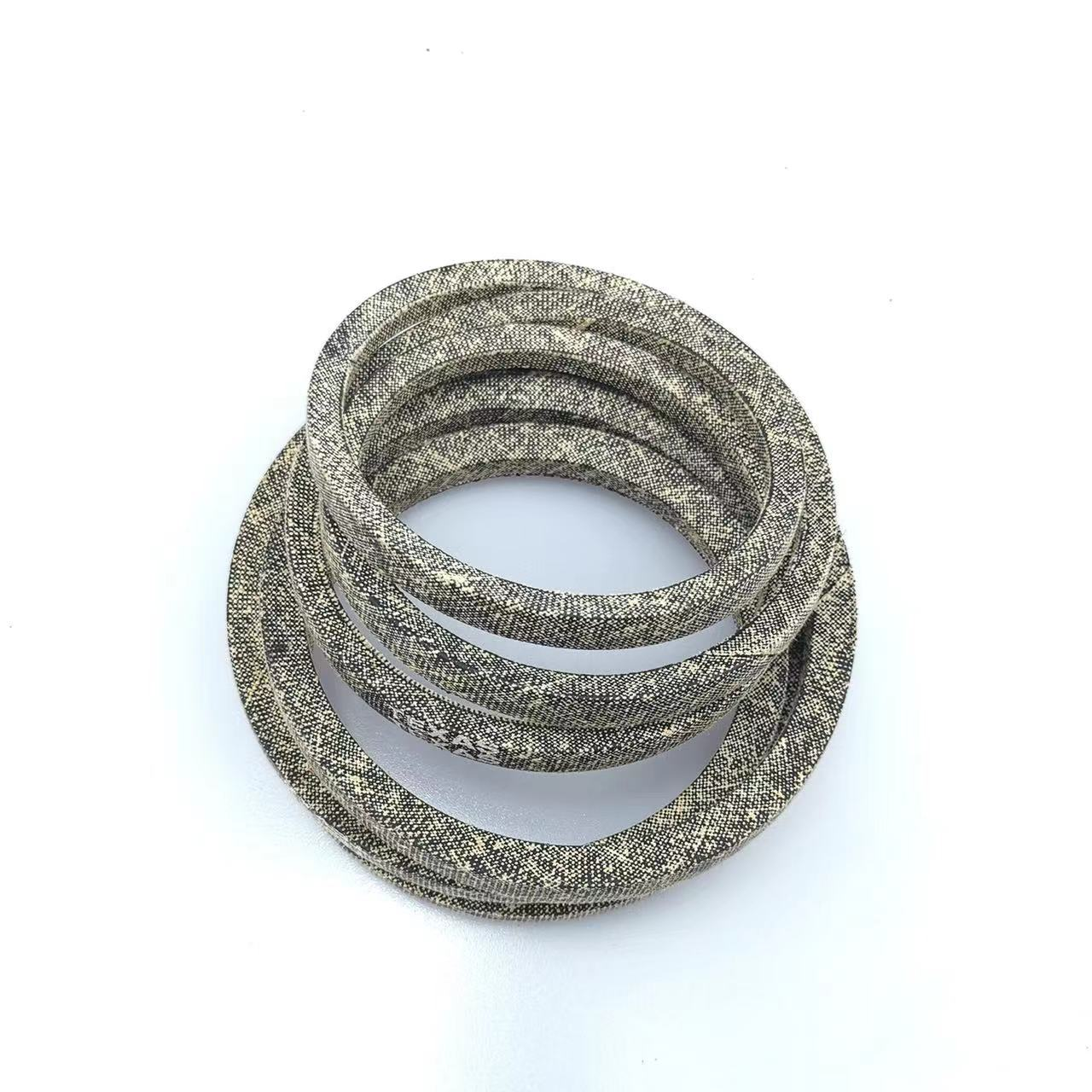
Material Quality and Environmental Resistance in Lawn Mower Belts
Aramid Cord (Kevlar) vs. Standard Reinforced Rubber: Tensile Strength and UV Resistance
When it comes to belt reinforcement materials, aramid cords like Kevlar offer about three times the tensile strength of regular polyester rubber belts while standing up better to stretching when loaded. Lab tests accelerated UV exposure have shown these aramid fibers keep around 92 percent of their strength after sitting out for 1,000 hours, whereas normal belts drop down to only about 45%. What this means is far fewer problems with surface cracks, which tend to be the biggest issue for equipment left outside where UV light constantly works away at materials over time.
Temperature and Friction Resistance: How Heat Cycling Accelerates Rubber Oxidation
When cutting grass on a regular basis, belt temps often hit around 160 degrees Fahrenheit (about 71 Celsius). This heat causes the rubber to oxidize, making it harder over time, creating tiny cracks, and ultimately losing strength. According to field observations, rubber tends to get significantly harder by more than 25% after just about 50 hours of operation. We also see annual drops in tensile strength ranging between 18 to 22 percent. These microscopic fractures usually start forming right where the belt meets the pulleys because of all that constant bending back and forth. Now here's something interesting: high tensile aramid belts stay flexible even when exposed to these harsh conditions. They actually cut down on performance issues by roughly 60% when compared against those nylon reinforced options that many manufacturers still rely on today.
Environmental Degradation: UV Exposure, Moisture, and Ozone Effects on Belt Polymers
Outdoor belt longevity depends on resistance to three key stressors: UV radiation, humidity, and ground-level ozone. The table below summarizes performance differences:
| Stressor | Impact on Standard Rubber | Aramid Resilience Improvement |
|---|---|---|
| UV Radiation | Polymer chain scission | 89% reduction in surface cracks |
| Humidity | Hydrolysis weakening cord bonds | 75% less moisture absorption |
| Ground-level Ozone | Accelerated rubber cracking | Near-complete ozone resistance |
These advantages contribute to a median service life of 2.8 years for aramid belts—over three times longer than economy belts, which last just 0.9 years on average.
Do Premium Materials Deliver Proportional Lifespan Gains in Real-World Mowing Conditions?
Aramid belts can last around three times longer than regular belts, though they come with a price tag that's roughly 1.3 to 1.5 times higher. Businesses typically see their money back because they need to replace these belts so much less often and face far less downtime during repairs. Homeowners might find the investment worthwhile mainly if they own larger properties, say anything over an acre of land. The truth is, most belt failures happen not because the material gives out but due to things like dirt buildup or incorrect installation. About two thirds of early failures actually trace back to these issues, which shows no amount of fancy engineering can fix what bad maintenance creates in the first place.
Drive Belt vs. Deck Belt: Load Profiles and Service Life Differences
Continuous Drive Duty vs. Intermittent Deck Engagement
The drive belts keep transferring power nonstop from the engine right to those spinning wheels as long as the mower is moving around, which naturally causes them to wear down gradually. Deck belts work differently though they kick in only when the blades start cutting grass, but there's something else going on here too. When those blades first engage, the deck belt experiences sudden bursts of force that can be almost three times what it normally handles just sitting idle. Even though deck belts aren't running constantly like drive belts, they actually go through about triple the amount of stress each hour compared to their counterparts. This extra strain leads to faster deterioration, especially noticeable where the belt meets the pulleys. According to some real world testing published last year in Equipment Maintenance Quarterly, most people find themselves replacing drive belts somewhere between 150 and 200 hours of operation, whereas deck belts tend to need changing sooner, usually around 100 to 150 hours if everything else stays pretty much the same.
Tension, Misalignment, and Debris Impact on Lawn Mower Belt Longevity
Improper tension, misalignment, and debris ingress affect both belt types differently:
| Stress Factor | Drive Belt Impact | Deck Belt Impact |
|---|---|---|
| Over-Tension | Bearing overload (+40% wear rate) | Core separation risk |
| Under-Tension | Slipping (friction heat buildup) | Incomplete blade engagement |
| Pulley Misalignment | Edge fraying | Rib shearing |
| Debris Ingress | Abrasive particles embed in grooves | Grass clippings wrap around pulleys |
Moist grass clippings accelerate hydrolysis of rubber compounds, reducing belt life by 25–30%. Regular tension checks and quarterly pulley cleaning can extend service life by 35% compared to neglected systems.
Cogged vs. Traditional V-Belts: Heat Dissipation and Operational Efficiency
How Cogging Reduces Internal Hysteresis and Lowers Surface Temperature
The notched back design of cogged belts helps cut down on internal stress when they wrap around pulleys during operation. What does this mean? Less energy gets lost as heat through constant flexing, which we call hysteresis in engineering terms. Compared to traditional solid back V-belts, these cogged designs can actually lower running temperatures by around 30 degrees Fahrenheit. The reduced heat buildup makes all the difference for belt longevity since it slows down the process where rubber starts to harden over time and cracks begin to form. For those working with heavy duty mowers that need serious torque, this kind of thermal management translates into belts that last longer while maintaining consistent power transfer throughout their service life.
Improved Flexibility and Contact Efficiency in Outdoor Operating Conditions
A notched belt design gives better flexibility while still holding strong under tension, which means it can wrap tightly around those little pulleys we see all over lawnmower decks. When the belt conforms properly to the pulley surface, it maintains good contact even if there's some slight misalignment or when dirt builds up over time. What does this actually mean? Less slippage happening, no hot spots forming where friction builds up especially bad during quick starts or when things get wet. Field tests have shown real world improvements too, with about 15 to 20 percent better power transfer efficiency compared to standard belts. And because the belt stays in consistent contact with the pulley, it doesn't wear down as fast from constant vibrations and impacts, so these belts tend to last longer between replacements.
OEM vs. Aftermarket Lawn Mower Belts: Real-World Durability and Performance Data
Field Study Results: Median Outdoor Service Life by Brand Tier (2020–2023, n = 412)
A recent look at 412 home lawnmowers revealed something interesting about belt longevity. Original equipment manufacturer belts typically made it through about 1.8 seasons before needing replacement, which is roughly 40 percent longer than what we saw with cheaper aftermarket alternatives that only lasted around half a season on average. The better quality aftermarket belts fared somewhat better at 1.5 seasons, though there was quite a bit of variation in their performance ranging plus or minus 0.3 seasons. Why do OEM belts hold up so much better? They contain special heat resistant materials that keep their strength even when temperatures climb 30 degrees Fahrenheit higher than what most aftermarket products can handle during those hot summer months when mowers work hardest.
Quality Consistency, Fitment Accuracy, and Long-Term Reliability Comparison
Beyond lifespan, OEM belts outperformed in critical reliability metrics:
| Metric | OEM Belts | Premium Aftermarket | Economy Aftermarket |
|---|---|---|---|
| Fitment Accuracy | 99% | 92% | 85% |
| Early Failure Rate | 3% (2023) | 11% | 28% |
| UV Degradation | 15% slower | Comparable | 25% faster |
Misalignment-related wear occurred 2.3× more often with aftermarket belts due to inconsistent manufacturing tolerances. While premium aftermarket belts reduced cracking by 18% versus economy versions, OEM belts retained 97% material integrity after 200 operating hours—making them the most reliable choice for demanding mowing conditions.
Frequently Asked Questions (FAQ)
What is the advantage of using aramid cords like Kevlar in lawn mower belts?
Aramid cords offer higher tensile strength and better resistance to environmental factors like UV radiation, moisture, and ozone, resulting in fewer surface cracks and longer service life.
How do cogged belts improve operational efficiency?
Cogged belts reduce internal hysteresis, lower surface temperature, and improve flexibility, leading to better heat dissipation and longer belt lifespan.
Why do OEM belts perform better than aftermarket alternatives?
OEM belts are made with special heat-resistant materials and have higher fitment accuracy and reliability, resulting in a longer service life compared to aftermarket belts.
How can maintenance affect the lifespan of lawn mower belts?
Regular tension checks and pulley cleaning can significantly extend belt life by preventing issues like misalignment and debris ingress that accelerate wear.
Table of Contents
-
Material Quality and Environmental Resistance in Lawn Mower Belts
- Aramid Cord (Kevlar) vs. Standard Reinforced Rubber: Tensile Strength and UV Resistance
- Temperature and Friction Resistance: How Heat Cycling Accelerates Rubber Oxidation
- Environmental Degradation: UV Exposure, Moisture, and Ozone Effects on Belt Polymers
- Do Premium Materials Deliver Proportional Lifespan Gains in Real-World Mowing Conditions?
- Drive Belt vs. Deck Belt: Load Profiles and Service Life Differences
- Cogged vs. Traditional V-Belts: Heat Dissipation and Operational Efficiency
- OEM vs. Aftermarket Lawn Mower Belts: Real-World Durability and Performance Data
- Frequently Asked Questions (FAQ)