EN
EN

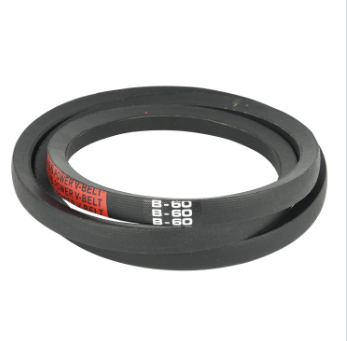
How Transmission Belts Impact Industrial Energy Efficiency
The hidden cost of inefficiency: Quantifying energy losses in conventional belt-driven systems
Old transmission belts in industrial plants waste a lot of energy. When V-belts slip, they can squander anywhere between 5 to 10 percent of the power going into them. What happens? The system generates extra heat, creates annoying vibrations, and wears out components faster, which means higher electric bills. Take a standard 100 kW motor that runs nonstop all year round. The money lost due to these inefficiencies could easily top fifteen thousand dollars each year. Alignment problems make things even worse. If pulleys aren't lined up properly, something as small as three degrees off parallel can cut down overall efficiency by around 15 to 20 percent, based on what most alignment experts know from experience. These kinds of losses build up slowly throughout production areas. Maintenance teams often miss them during regular checks, even though the cost adds up over time and affects both the bottom line and day-to-day operations.
Core efficiency levers: Belt geometry, material hysteresis, and tension dynamics
Three interdependent technical factors govern transmission efficiency:
- Geometry: Synchronous belts eliminate slippage via toothed engagement, achieving up to 98% efficiency—significantly higher than the 92–95% typical of conventional V-belts.
- Material science: Advanced polymer compounds reduce hysteresis losses by ~30% compared to standard rubber, minimizing energy dissipated as heat during cyclic flexing.
- Tension precision: Optimal tension balances grip and friction—under-tensioning causes slippage; over-tensioning increases bearing loads by up to 25%, raising parasitic losses and shortening component life.
When calibrated together, these levers yield compounding gains: properly optimized systems achieve 12–18% higher overall efficiency than baseline configurations.
Comparing Transmission Belt Types by Efficiency and Application Fit
Synchronous belts: Near-zero slippage and 98% peak efficiency in controlled environments
In clean environments that stay at stable temperatures, synchronous belts can reach efficiencies around 98%. These are ideal places where exact timing matters most, think about those automated assembly lines we see everywhere now or the feed systems on CNC machines. The belt's teeth prevent any slippage whatsoever, which cuts down on energy waste compared to other belt types maybe by over 5%, though actual savings depend on specific setup. But watch out when things get dirty, damp, or not properly aligned because performance drops off fast under these conditions. That means proper installation becomes absolutely crucial along with keeping the environment controlled. For applications where timing must be spot on with no room for error, synchronous belts still hold their position as top choice among engineers, but only if everyone sticks to good maintenance practices throughout operation.
V-belts vs. ribbed belts: Balancing efficiency (92–95% vs. 96%), flexibility, and maintenance tolerance
When it comes to belt systems, V-belts and ribbed belts actually handle different jobs quite differently. The V-belt type typically runs at around 92 to maybe even 95 percent efficiency. They're pretty flexible overall and can handle those little alignment issues that happen sometimes. That makes these belts great for things like variable speed drives or older equipment where swapping out parts is something that happens regularly. On the other hand, ribbed belts generally hit about 96% efficiency because they bend easier and spread the workload better across their surface. But there's a catch here. These ribbed versions need everything lined up just right and require much more careful tension adjustments during installation compared to standard V-belts.
| Feature | V-Belts | Ribbed Belts |
|---|---|---|
| Efficiency | 92–95% | 96% |
| Flexibility | High (accommodates misalignment) | Moderate (requires better alignment) |
| Maintenance Tolerance | Good (easy to install and replace) | Excellent (longer lifespan with care) |
Choose V-belts for adaptability and service simplicity; select ribbed belts when efficiency and durability are prioritized in well-maintained, high-power systems.
Critical Transmission Efficiency Factors Beyond Belt Type
Tension, alignment, and wear: How operational discipline affects real-world transmission efficiency
The type of belt used establishes what's theoretically possible, but how well it actually performs depends largely on day-to-day maintenance practices. Getting the tension right makes all the difference when it comes to preventing those costly energy losses from slipping belts. According to ASME standards, belts with proper tension can cut down on wasted energy by around 1-2% compared to ones that are too loose. When belts aren't aligned properly either, even small misalignments matter a lot. If the angle is off by more than half a degree over 100mm of pulley width, friction losses jump as much as 15%, mainly because the load isn't distributed evenly across the belt surface. And let's not forget about wear and tear. As belts thin out, their ability to grip diminishes. A belt that has lost 10% of its original thickness will experience about 8% more slipping during operation. Modern equipment like laser alignment systems and ultrasonic tension meters help keep things running smoothly longer. For most facilities already in operation, focusing on regular checks for tension levels, alignment accuracy, and belt condition tends to deliver better results than simply replacing belts with newer models. After all, these maintenance factors directly tackle where most energy gets wasted in the system itself.
Selecting the Right Transmission Belt for Your Industrial Application
Matching belt technology to load profile, environment, and reliability requirements
Selecting the optimal transmission belt requires evaluating three application-specific dimensions:
- Load profile: Cyclic shock loads demand belts with reinforced tensile cords (e.g., aramid or polyester); constant high-torque applications benefit most from synchronous belts with carbon fiber cores.
- Environment: Temperatures above 120°C require thermoset elastomers; chemical exposure zones necessitate fluoropolymer-coated or EPDM-based constructions.
- Reliability requirements: Mission-critical processes warrant steel-reinforced timing belts rated for 98% efficiency and extended service life—reducing unplanned downtime risk.
Mismatched belts increase energy consumption by up to 15% due to avoidable slippage and hysteresis losses. Always validate selections through application-specific testing under peak operating conditions—not just catalog specs—to confirm performance thresholds before full deployment.
FAQ
What are the main types of transmission belts used in industrial applications?
The main types of transmission belts used in industrial applications are synchronous belts, V-belts, and ribbed belts.
Why does proper alignment matter in belt-driven systems?
Proper alignment matters because even small degrees of misalignment can lead to significant efficiency loss and increased friction that causes wear and tear.
How can the efficiency of transmission belts be maximized?
Efficiency can be maximized through optimized belt geometry, selecting advanced material compounds, precise tension adjustments, and regular maintenance checks.