EN
EN

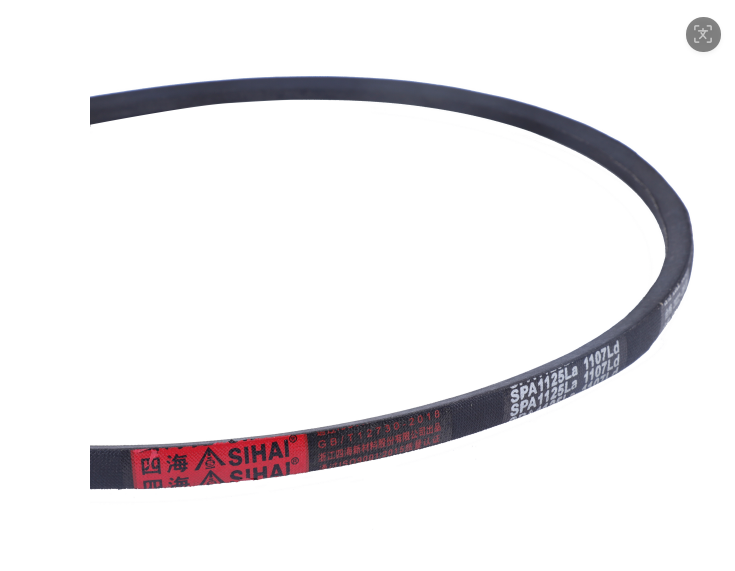
What Are the Main Causes of V Belt Cracking?
Finding deep fractures on your machinery drive components during a routine check is always a frustrating discovery. If you are noticing repeated surface splits, you are likely wondering what is causing the damage and how to stop it. To give you a quick answer, the main causes of v belt cracking are excessive operating heat, using pulley sheaves that are too small, severe shaft misalignment, and exposure to oil or debris contamination. When these issues are left unchecked, the rubber material quickly loses its flex, hardens, and splits apart under normal operating loads. Catching these surface fractures early allows your maintenance team to swap out the worn part during a quick, scheduled break rather than dealing with a costly, chaotic machine breakdown in the middle of a busy shift.
Why You Cannot Ignore a Cracked Drive Belt
Running a brittle or fractured power transmission part until it completely snaps is an expensive gamble for any business. The moment a crack cuts deep into the rubber matrix, the component begins to suffer from subtle micro-slippage inside the pulley grooves. This slippage might seem minor at first, but it causes a noticeable drop in rotational speed, reducing the output of your ventilation fans, material conveyors, or production machinery. Over time, this unstable energy transfer creates harsh vibrations that travel directly into your equipment hardware, causing premature wear on expensive spindle bearings and warping motor shafts.
The real disaster occurs when the internal tensile cords snap under a full workload. The broken ends of the rubber whip violently inside the metal guard housing, instantly destroying nearby digital sensors, wiring harnesses, or temperature probes. The financial fallout from a sudden rupture goes far beyond the price of a replacement part. Your business faces unexpected downtime, costly emergency repair labor, and potential late-delivery penalties from frustrated customers who expect their orders on schedule.
Top 4 Reasons Your Drive Belts Are Cracking
Intense Heat and Rubber Hardening
Continuous exposure to high temperatures is the absolute leading cause of premature rubber splitting. Industrial power transmission parts are made from specialized rubber compounds designed to flex millions of times throughout their service life. However, if your machinery operates in a poorly ventilated area, or if constant belt slippage builds up frictional heat inside the sheave grooves, the internal rubber chemistry begins to change. The heat triggers a process where the internal polymer chains form rigid, cross-linked bonds, stripping away the natural elasticity of the material. As this baked, brittle rubber continues to flex rapidly over rotating pulleys, it can no longer bend smoothly, causing the material to split into evenly spaced cracks along the base.
Wrong Pulley Sizes and Extreme Bending
Mechanical stress from poor system layout geometry will quickly ruin even a premium rubber component. Many compact modern machines utilize tight configurations with small-diameter sheaves or aggressive backside idlers to save physical space. Forcing a thick wrapped profile to bend sharply backward over an undersized idler places immense physical stress on the base elastomer. International power transmission standards specify minimum pulley diameters for every size profile to ensure safe operation. When your system uses a pulley that is too small, the compression rubber layer is stretched far past its physical limits, causing deep cracks to develop and rapidly spread toward the internal load-carrying cords.
Misaligned Pulleys and Flange Friction
Shaft and pulley misalignment is a silent mechanical issue that causes distinct longitudinal splitting along the length of your drive parts. If a motor mounting bracket is slightly warped or a spindle becomes loose, the pulley sheaves will no longer share a true centerline. This crooked alignment forces the rubber component to enter and exit the sheave grooves at an angle, scraping the sidewalls heavily against the sharp upper edges of the metal flanges. This intense side pressure places an uneven load across the internal aramid or polyester cords, slicing the rubber matrix apart and causing the outer fabric cover to peel and delaminate.
Oil, Dirt, and Chemical Exposure
The everyday working environment around factory processing lines and outdoor equipment can be incredibly harsh on rubber polymers. Gritty materials like soil, industrial dust, and organic debris easily settle deep into the pulley grooves, acting like sandpaper that grinds down the protective fabric jacket of your drive parts. Even worse, leaking equipment fluids like petroleum lubricants, industrial solvents, or aggressive cleaning detergents chemically attack the rubber compound. This chemical exposure causes the elastomer to swell, turn spongy, and lose its structural firmness, allowing normal operating torque to quickly tear the softened material apart into jagged fractures.
Choosing the Right Material to Prevent Cracking
If you want to eliminate constant cracking issues, you need to look at the material science behind alternative rubber formulations. Standard low-cost drive components are usually made from basic chloroprene rubber, which hardens and cracks easily when exposed to high heat or severe weather. Upgrading your inventory to components made with an EPDM rubber matrix provides an immediate boost in durability. EPDM stays flexible across a massive temperature range, from minus forty degrees Celsius up to one hundred and thirty degrees Celsius, without drying out or cross-linking.
For tight drive systems with small pulleys, switching to a notched or cogged raw-edge profile is an excellent way to reduce bending stress. These molded notches allow the rubber to flex around tight curves with far less resistance and friction, keeping operating temperatures low. For high-torque machinery over fifteen horsepower, choosing parts reinforced with high-modulus aramid tensile cords will prevent stretching and eliminate the heavy slippage heat that triggers the cracking process in the first place.
Real-World Troubleshooting Case: Fixing a High-Heat Exhaust Fan
An industrial manufacturing plant was facing a major reliability issue with its primary facility ventilation system. The heavy-duty exhaust fans, located close to high-temperature production ovens, were destroying their standard wrapped drive parts every forty-five days. The maintenance crew noticed that brand-new replacements would develop deep base cracks within just three weeks of installation, leading to sudden snaps that repeatedly halted factory ventilation.
An engineering check showed that ambient temperatures inside the fan housing were reaching eighty-five degrees Celsius, which was completely baking the chloroprene rubber material. Additionally, the system used a tiny backside idler pulley that was forcing the brittle rubber into an aggressive reverse bend.
The team solved the issue by rerouting the nearby exhaust heat to lower the local temperature to forty degrees Celsius and swapping the small idler for a larger, dynamically balanced pulley. Finally, they replaced the worn parts with an advanced drive system featuring a fiber-reinforced EPDM core and high-modulus aramid cords. With these quick adjustments, the new system ran smoothly for over nine consecutive months without a single sign of surface cracking, saving the plant thousands of dollars in emergency labor.
Smart Buying Tips for Procurement Managers
When managing bulk procurement contracts for replacement mechanical parts, buying based on the lowest price tag or simple physical dimensions is a recipe for operational trouble. Your sourcing department must verify that all incoming inventory conforms to recognized international quality baselines, such as ISO 4184, DIN 2215, or RMA/MPTA IP-20.
These global engineering standards ensure that every part has precise cross-sectional depths, uniform top widths, and exact groove angles. Choosing components that strictly adhere to these manufacturing baselines guarantees predictable tension profiles, matching wear rates, and total cross-brand compatibility across your entire equipment fleet, saving your business from unexpected warehouse shortages and premature component failures.
Frequently Asked Questions
What are the main causes of v belt cracking on industrial drives?
The main causes of v belt cracking are excessive operating heat, undersized pulley sheaves, severe alignment errors, and chemical or oil contamination. When these conditions exist, the underlying rubber matrix loses its flexibility, hardens, and splits under normal mechanical loads.
Can you use chemical belt dressings to repair a cracked drive component?
Chemical belt dressings or spray conditioners should never be used to repair a cracked part. While they might give a brief, temporary boost to surface grip, these sprays contain petroleum distillates that actively break down the rubber chemistry, softening the material and accelerating internal structural failure.
Why does pulley misalignment cause a rubber belt to split lengthwise?
When your pulley sheaves are misaligned, the rubber profile enters the groove at a crooked angle. This forces the sides of the component to scrape hard against the sharp top edges of the sheave flanges, creating high lateral shear forces that slice the rubber matrix lengthwise parallel to the tensile cords.
What is the advantage of a notched profile over a wrapped design for crack resistance?
Notched profiles feature pre-engineered slots molded along the base that allow the component to bend around small pulleys with significantly less compression stress and heat buildup. Standard wrapped designs have a solid profile that suffers from high internal bending resistance, making them crack much faster on tight drives.
How often should maintenance teams check heavy-duty machinery for surface cracks?
For standard multi-shift factories, a quick visual check is recommended every five hundred operating hours or as part of a monthly preventive maintenance schedule. High-load or high-temperature systems should be checked bi-weekly using handheld infrared thermometers to catch abnormal heat buildup before cracks form.
How do leaking lubricants and industrial oils affect a standard rubber belt?
Petroleum lubricants and industrial oils chemically attack standard rubber elastomers, causing the compound to absorb fluid, swell, and turn spongy. Once the material is softened and compromised by oil contamination, the mechanical forces of rotational torque quickly tear the rubber apart into irregular fractures.
When should you replace a worn pulley sheave to protect a new drive component?
You should replace a pulley sheave immediately if a professional groove gauge shows more than ten percent wear along the sidewall surfaces, or if you see visible ridges and pitting. Running a new part inside a worn, dished-out groove destroys the wedging effect, causing instant slippage and rapid heat cracking.
What causes a newly installed drive component to flip over inside the pulley grooves?
A component flips over due to severe tracking errors or heavy lateral forces. This is almost always caused by bad pulley misalignment, a bent idler bracket, or worn spindle bearings that tilt when the machine is under load, forcing the part out of its true path.
Choosing a Reliable Power Transmission Partner
Keeping your facility running at peak efficiency requires a resilient supply chain backed by dependable manufacturing consistency. Procurement managers need to partner with an experienced manufacturer that can deliver long-term component durability and uniform material quality, sample after sample.
SIHAI brings extensive manufacturing capacity and proven technical expertise to the global power transmission market. Operating advanced automated production lines with rigorous quality control checkpoints, the facility produces heavy-duty industrial belting built to survive extreme heat and heavy mechanical workloads. A robust global logistics network ensures reliable lead times and predictable shipping schedules, while specialized custom engineering capabilities allow for precise material adaptations to match unique OEM machine requirements. By focusing on full compliance with global technical standardizations, the organization provides sourcing professionals with the reliable component lifespan and uniform performance needed to minimize unexpected downtime across worldwide operations.