EN
EN

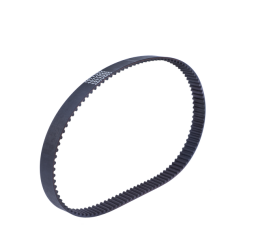
Recognizing When a Timing Belt Needs Replacement
A timing belt runs quietly for thousands of hours in industrial machinery — until it does not. The tooth that strips during a night shift, the cord that snaps mid-cycle on a production line, the crack that propagates across the belt width during a critical run — none of these failures happen without prior evidence. The evidence is visible. It simply needs to be looked for.
Visual Wear Patterns and Their Causes
The most reliable indicator of timing belt condition is tooth profile inspection. Tooth root cracking — fine fissures radiating from each tooth base — indicates flex fatigue. Every tooth bends entering and exiting a pulley; after millions of cycles, the rubber or polyurethane exceeds its fatigue limit. Root cracks across more than 10% of belt length demand immediate replacement. Tooth surface wear — a polished, flattened, or asymmetrical driving face — signals pulley misalignment or insufficient tension. The misaligned edge wears faster, creating a wedge-shaped profile that degrades meshing accuracy. Backside cracking indicates excessive idler pressure or undersized pulley diameter. Tensile cord exposure — visible fiber strands — means structural integrity is already lost.
Performance Symptoms Before Failure
Not all timing belt wear is visible. Positional drift in a servo-driven axis — the CNC machine losing registration, the pick-and-place unit missing targets — often traces to belt tooth deformation invisible to the eye but measurable in accumulated error. Audible chirping during acceleration signals teeth snapping into grooves under load rather than engaging smoothly — a consequence of pitch geometry change from tooth wear.
The Cost of Running a Worn Timing Belt
Real-World Case — A Packaging Line Avoids Disaster
A German food packaging plant operated a carton-forming machine driven by a 25 mm HTD-profile timing belt. During scheduled weekend maintenance, a technician noted tooth root cracking across 15% of the belt circumference and measured 2% elongation. The belt was replaced — a 45-minute job costing €80. Microscopic inspection later revealed tensile cord fatigue fractures in multiple strands, estimating 200 to 400 operating hours remaining before catastrophic failure. Had it failed during production, the line would have stopped — at an estimated €4,200 per hour. The plant formalized a 10% tooth-crack threshold for immediate replacement. A worn belt also slips under load, wasting energy through friction and generating heat that accelerates degradation of both belt and pulley. A misaligned drive can consume 3% to 5% more energy than a properly maintained one.
Establishing a Replacement Strategy
Hours-Based vs. Condition-Based Replacement
Manufacturers rate timing belt service life at 6,000 to 20,000 hours depending on load, speed, and pulley configuration. Hours-based replacement suits inaccessible drives where inspection costs exceed scheduled replacement costs. Condition-based replacement — visual inspection at defined intervals with replacement at specific thresholds — suits accessible drives where failure consequences are moderate. Environmental factors accelerate wear: ozone attacks natural rubber in welding shops and near brush-type motors; oil mist causes rubber swelling; abrasive dust embeds in the belt surface and accelerates pulley wear. For drives in harsh environments, halve the manufacturer's rated interval unless testing proves otherwise.
Practical Replacement Guidelines
Five Indicators It Is Time to Replace
First, tooth root cracking on more than 10% of the circumference. Second, measured elongation exceeding 1.5% of original length — indicating tensile cord stretch that changes pitch geometry. Third, backside cracking or glazing from excessive idler pressure. Fourth, visible tensile cord exposure anywhere — structural integrity is gone. Fifth, repeatable positional drift in servo applications uncorrectable through controller tuning. A timing belt exhibiting any of these is no longer reliable.
Frequently Asked Questions
When should an industrial timing belt be replaced?
A timing belt should be replaced when tooth root cracking exceeds 10% of belt length, elongation exceeds 1.5%, tensile cord is exposed, or positional drift becomes uncorrectable. Even without visible signs, replace at the manufacturer's rated service hours — typically 6,000 to 20,000 hours.
What causes tooth root cracking in a timing belt?
Tooth root cracking results from flex fatigue. Each belt tooth bends entering and exiting the pulley. After millions of cycles in a timing belt drive, the material at the tooth root exceeds its fatigue limit. Undersized pulleys and high tension accelerate failure.
How does pulley misalignment affect timing belt life?
Misalignment loads one belt edge more heavily, causing asymmetrical tooth wear. The belt tracks toward the tighter side, increasing friction and heat. Belt life can drop 50% or more with angular misalignment exceeding 0.25 degrees.
Why do belts in dusty or oily environments fail faster?
Abrasive particulates embed in the belt surface and grind between teeth and pulley grooves. Oil mist causes rubber swelling, reducing tensile strength. Industrial timing belt drives in these environments should be inspected twice as frequently as those in clean conditions.
What is the difference between hours-based and condition-based replacement?
Hours-based replacement follows the manufacturer's rated service life — replace at a fixed interval. Condition-based uses visual inspection and elongation measurement to trigger replacement at specific thresholds. Hours-based suits inaccessible drives; condition-based suits accessible drives.
Can a worn timing belt cause secondary equipment damage?
Yes. A timing belt snapping under tension can whip into sensors, wiring, and guard panels. A belt jumping teeth on the pulley causes the driven equipment to lose synchronization, potentially damaging tooling or product before the fault is detected.