EN
EN

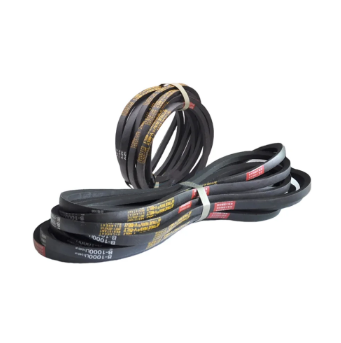
Certified Drive Belt Types for Heavy-Duty, Long-Term Industrial Supply
V-Belts (Classical, Narrow, Metric) and BIS Compliance (IS 2494 Parts 1 & 2, IS 14261)
V belts come in different types like classical, narrow, and metric versions and they play a really important role in transmitting power across many industrial applications where horsepower ranges from around 15 to 500 kW. What makes them so effective is their trapezoidal shape which creates friction when they sit in pulley grooves, giving them an impressive efficiency rate between 90% and 95%. The Bureau of Indian Standards has set strict rules for how these belts perform. According to IS 2494 parts 1 and 2, there are specific requirements for dimensions and overall construction quality. Another standard called IS 14261 requires that belts must withstand at least 25 MPa of tension force, making sure they can handle repeated stress over time. Most industrial setups actually use multiple belts together, especially in things like compressors and HVAC systems. When getting certified by BIS, manufacturers need to prove their belts can survive being aged at high temperatures too. Specifically, the belts have to go through testing at 100 degrees Celsius for three full days straight to see if they maintain their properties under prolonged heat exposure.
Timing and Multi-Ribbed Drive Belts: ISO/IEC 60034-30 and DIN 2215 Certification for Precision Applications
When it comes to precise movement without slipping, like what's needed in CNC machines or on factory assembly lines, synchronous timing belts and their multi-ribbed counterparts can reach efficiencies around 98%. The standards landscape gets interesting here too. One standard, ISO/IEC 60034-30, deals with how motors interact electromagnetically with other equipment. Another important spec comes from DIN 2215 which looks at how well belt teeth hold up against forces exceeding 18 Newtons per millimeter. This matters because when machines are running hard, maintaining exact positions becomes crucial. Manufacturers also need third party checks for things like tensile strength (at least 22 megapascals) and ozone resistance according to ISO 1431-1 standard. They test belts spinning at 5,000 revolutions per minute to see if they'll last. Production runs now include laser etched codes on each batch so companies can track materials throughout the supply chain. This tracking helps spot fake components before they cause problems down the line.
Material Durability of Drive Belts in Harsh Factory Environments
EPDM, Chloroprene, and HNBR Elastomers: Performance Comparison for Oil, Heat, Ozone, and Abrasion Resistance
Industrial drive belts operate under extreme thermal, chemical, and mechanical stress—making elastomer selection decisive for service life and system reliability. Three high-performance materials dominate demanding environments:
- EPDM (Ethylene Propylene Diene Monomer): Exceptional ozone and steam resistance, retaining flexibility up to 150°C. Its low electrical conductivity makes it ideal for food processing and cleanroom applications—though oil resistance is limited.
- Chloroprene (Neoprene): Offers balanced resistance to oils, fuels, and moderate heat (up to 100°C), with robust tensile strength. Commonly used in automotive and general machining settings where incidental lubricant exposure occurs.
- HNBR (Hydrogenated Nitrile Butadiene Rubber): Delivers superior performance in severe conditions—withstanding continuous operation up to 200°C and resisting aggressive oils and chemicals. It outperforms standard nitrile rubber in heat aging by 2–3× and retains >90% tensile strength after 72 hours at 150°C (DIN 53516). In oil-saturated environments, HNBR resists swelling 50% better than chloroprene, making it essential for foundries, chemical plants, and high-temperature kiln drives.
Matching material to operational hazards—heat, lubricants, UV exposure, or abrasion—extends service life by 40–60% in cement, steel, and recycling operations.
Design and Operational Criteria That Enable Reliable Long-Term Drive Belt Supply
Power Transmission Capacity, Misalignment Tolerance, and Layout Flexibility for High-Duty-Cycle Machinery
Getting reliable performance over time depends heavily on getting three things right together: how much power can be transmitted, how much misalignment is tolerated, and whether the system fits where it needs to go. When machines handle peak torque situations without slipping, that's absolutely essential for equipment running non-stop like compressors, extruders, and those big conveyor belts we see in manufacturing plants daily. Most industrial setups need at least 3 degree misalignment tolerance because shafts just don't stay perfectly aligned in environments with constant vibration. This small allowance makes a big difference actually, cutting down on edge wear and making belts last about 30% longer than they otherwise would. The ability to fit into tight spaces matters too. Flexible layouts let engineers route components around corners and through crowded machinery areas, which means factories can upgrade existing systems rather than tearing everything apart. Plants that focus on these basics tend to experience roughly 40% fewer unexpected shutdowns compared to those that cut corners here. And maintenance crews definitely notice the difference when parts last longer and failures happen less frequently.
Certification, Testing, and Traceability Requirements for Industrial Drive Belt Supply Chain Assurance
BIS Certification Process, Third-Party Validation (Tensile Strength ≥25 MPa, Heat Aging at 100°C/72h), and Batch Traceability
Getting long term reliability isn't just about meeting standards it needs actual proof throughout the whole process. When companies get BIS certified according to standards IS 2494 for V belts and IS 14261 for timing belts, they have to show proper documentation from start to finish covering everything from how products are designed right down to where materials come from and what happens during manufacturing. Independent testing takes things even further though. For example, belt manufacturers must prove their products can handle tensile strength of at least 25 MPa while also surviving heat aging tests at 100 degrees Celsius over 72 hours. These tests mimic the kind of extreme conditions belts face over many years inside industrial equipment like kilns, air compressors, and plastic extrusion machines.
Modern traceability combines physical identifiers—like laser-etched batch codes—with digital infrastructure, linking ISO-compliant material certificates to blockchain-enabled production logs. This dual-layer system enables rapid recall response and deters counterfeits. It also supports tiered validation aligned with operational risk:
| Certification Level | Validation Requirements | Application Context |
|---|---|---|
| Level 3.1 | Manufacturer’s internal testing records | General industrial machinery |
| Level 3.2 | Independent lab verification + audit trails | High-risk/high-uptime operations |
Together, these safeguards ensure every drive belt shipment arrives with auditable proof of origin, durability, and regulatory alignment.
FAQ
What are the main types of drive belts used in industrial applications?
The main types include V-belts (classical, narrow, metric), timing belts, and multi-ribbed belts.
What standards do drive belts need to comply with?
In India, drive belts must comply with IS 2494 and IS 14261 standards for V-belts and timing belts, respectively. International standards such as ISO/IEC 60034-30 and DIN 2215 are also relevant for precision applications.
What materials are commonly used for industrial drive belts?
Common materials include EPDM, Chloroprene (Neoprene), and HNBR, each offering varying resistance to oils, heat, ozone, and abrasion.
Why is traceability important in drive belt production?
Traceability ensures product authenticity, supports quality assurance, and enables quick recall responses to prevent potential issues.
Table of Contents
- Certified Drive Belt Types for Heavy-Duty, Long-Term Industrial Supply
- Material Durability of Drive Belts in Harsh Factory Environments
- Design and Operational Criteria That Enable Reliable Long-Term Drive Belt Supply
- Certification, Testing, and Traceability Requirements for Industrial Drive Belt Supply Chain Assurance
- FAQ