EN
EN

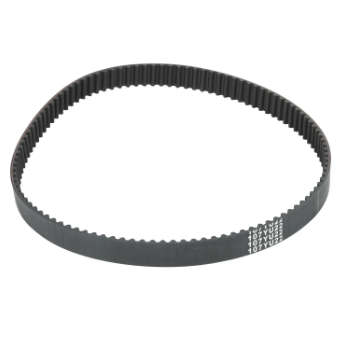
Why Timing Belt Precision Directly Impacts Engine Performance
Synchronization accuracy and its effect on valve timing, combustion efficiency, and emissions compliance
Getting the timing belt right keeps the crankshaft and camshaft perfectly aligned so valves open and close exactly when they should during combustion. Even small timing errors matter a lot. If there's a lag of just 2 or 3 milliseconds, it messes up how fuel mixes with air and affects how long the combustion lasts, cutting engine efficiency by around 7 to 12 percent according to SAE International research from last year. When this happens, more unburned fuel ends up in exhaust fumes, making it harder for vehicles to meet strict emission rules like Euro 7 and EPA Tier 4 standards which limit nitrogen oxide emissions to no more than 0.05 grams per kilometer. Turbocharged engines face particular problems here. When exhaust valves close late, boost pressure drops by about 15 to 20 percent. And if intake valves open too soon, exhaust gases can actually flow backward into the intake system. Modern timing belts need to stay accurate within 0.1 millimeter throughout all temperature changes. That's why manufacturers now use special HNBR materials designed to withstand oil exposure and maintain flexibility even when running at consistently high temperatures around 150 degrees Celsius.
The ±0.5° crankshaft angular tolerance threshold for modern GDI and turbocharged engines
Gasoline Direct Injection (GDI) and turbocharged powertrains operate under extreme cylinder pressures where even minor timing deviations trigger cascading failures. Exceeding ±0.5° crankshaft angular displacement significantly raises risks:
- Valve-piston interference likelihood jumps 300% in interference engines
- Fuel spray mistiming relative to intake stroke increases particulate matter by 22%
- Ignition timing errors induce pre-detonation forces exceeding 2,000 psi
Leading timing belt designs keep their phase integrity even when dealing with those tricky serpentine accessory loads and all sorts of thermal stress. They do this by using aramid tensile cords which show really low creep rates – about less than 0.03% at 120 degrees Celsius according to SAE J1459 standards. Fiberglass reinforced alternatives tell a different story though. These tend to stretch around 0.1% under the same conditions, which can actually push them beyond acceptable tolerance levels for engines producing serious power output. Because of this issue, most manufacturers have started demanding laser etched alignment marks on these belts. The marks help technicians check installation accuracy down to within plus or minus 0.3 degrees, something crucial for avoiding expensive drivetrain damage that would void warranties.
Key Timing Belt Construction Factors That Ensure Long-Term Precision
Rubber compound comparison: HNBR vs. neoprene for thermal stability and tooth fidelity under cyclic loads
HNBR, or Hydrogenated Nitrile Butadiene Rubber, keeps those teeth looking good even when things get really hot around 150 degrees Celsius. That's way better than regular neoprene which starts to struggle once it hits just 100 degrees. What makes HNBR so tough? Well, its special polymer structure doesn't break down easily when faced with engine heat or oil fumes. This means the belt stays accurate over time, especially important during those long periods of heavy use. Some independent tests have shown something pretty impressive too. After going through 100 thousand stress cycles, HNBR belts still maintain almost all their original shape, keeping about 98% of that perfect tooth pattern. Meanwhile, standard neoprene belts start to warp quite a bit, showing around 12% deformation after the same amount of wear and tear.
Tensile cord materials: aramid’s superior creep resistance over fiberglass at sustained 120°C (per SAE J1459)
When put through the SAE J1459 test at 120 degrees Celsius for 500 straight hours, aramid fiber only stretches by 0.03%. That's seven times better than what we see with fiberglass alternatives. Such low creep matters a lot when it comes to keeping those camshafts properly phased within that tight +/- 0.5 degree window required by today's variable valve timing systems and turbochargers. What makes aramid stand out is its crystal structure that spreads tension evenly throughout each belt tooth. Fiberglass tends to crack internally over time when exposed to constant heat stress. Looking at actual field performance, most mechanics report seeing these aramid belts last around 100,000 miles before needing adjustment in about 9 out of 10 turbocharged engines they work on.
Timing Belt Pitch Tolerance Standards and Real-World Synchronization Reliability
ISO 5218 compliance: how HTD8M’s ±0.05 mm pitch tolerance minimizes cam phasing drift vs. standard 8M
The timing belt's pitch tolerance plays a major role in keeping the valves and crankshaft properly synchronized. When the alignment goes off by more than ±0.1° on the crankshaft angle, it can lead to engine misfires or just plain wear and tear, especially in those interference engines we all know and love. Now look at ISO 5218 compliant HTD8M belts they maintain a really tight ±0.05 mm pitch tolerance, which is actually half as much as what regular 8M belts offer. This level of precision makes a big difference when engines are running at high RPMs because it cuts down on those cumulative tooth engagement errors. Testing on dynos shows camshaft phasing drift drops around 68%. And for turbocharged engines or vehicles with variable valve timing systems, this tight spec helps keep oil pressure stable so synchronization issues don't get worse over time. The deeper teeth in High Torque Drive belts also spread out the tension forces across those aramid cords, something that stops the annoying micro-slip problems seen in standard trapezoidal belts when torque gets above 180 N·m.
Why Timing Belts Are Not Interchangeable With Auxiliary Belts—A Precision Engineering Imperative
Timing belts and auxiliary belts do completely different jobs inside engines, and their construction shows this difference clearly. Timing belts have those specific teeth spaced just right so they can lock into the camshaft and crankshaft gears. This keeps everything timed perfectly between when valves open and where pistons actually are during operation. Getting this timing right matters a lot for how well fuel burns, controlling emissions, and keeping things safe mechanically. On the other hand, auxiliary belts (think V-belts or serpentine belts) work differently. They basically grip onto smooth pulleys through friction to power stuff like alternators, water pumps, and air conditioning units. These belts allow for about 2 to 5 percent slippage which would totally mess up the tight +/- 0.5 degree accuracy needed for proper engine timing. If someone swaps these belts around, bad things happen fast including valve collisions with pistons, serious camshaft timing problems over 3 degrees off, and complete engine destruction. Mechanics know this isn't just good advice; it's basic common sense in building reliable powertrains.
FAQ
What is the primary function of a timing belt?
A timing belt keeps the crankshaft and camshaft aligned, ensuring valves open and close at the correct times during engine combustion. It plays a crucial role in engine performance and efficiency.
Why is timing belt precision important?
The precision of a timing belt affects valve timing, fuel combustion efficiency, and emissions compliance. Small errors can lead to decreased engine efficiency and difficulties meeting emission standards.
How does temperature affect timing belt accuracy?
Modern timing belts need to maintain precision across various temperatures. HNBR material is used for its resilience against high temperatures and oil exposure, ensuring accuracy within 0.1 millimeter.
Can timing belts and auxiliary belts be interchanged?
No, timing belts and auxiliary belts are designed for different functions. Timing belts synchronize the engine's internal components, while auxiliary belts power accessories like alternators and air conditioning units.
Table of Contents
- Why Timing Belt Precision Directly Impacts Engine Performance
- Key Timing Belt Construction Factors That Ensure Long-Term Precision
- Timing Belt Pitch Tolerance Standards and Real-World Synchronization Reliability
- Why Timing Belts Are Not Interchangeable With Auxiliary Belts—A Precision Engineering Imperative
- FAQ